What Is a Content Strategy? a Clear Guide with Examples
Learn what a content strategy is, how it differs from a content plan, and how to build one with clear goals, practical examples, and useful measures of
A content strategy is a plan for creating, sharing, and managing content that meets your audience's needs and supports a clear business goal. It defines who the content serves, what it should help them do, where they will find it, and how you will measure success. Unlike a publishing schedule, a content strategy explains why each piece deserves to exist and how it will stay useful over time.

What Does a Content Strategy Include?
A useful content strategy connects audience needs, business goals, content choices, and ongoing care. It should help a team decide what to publish and make clear what to leave out.
For example, a software company might attract many readers with broad career advice, yet those readers may never need its accounting product. A strategy focused on small business bookkeeping would reach fewer people but give those readers a stronger reason to pay attention.
Content can include website pages, articles, videos, emails, social posts, product guides, and help documents. Content strategy applies to all of them, not just a blog or an SEO campaign.
The main parts should answer these questions.
| Part | Question It Answers | Practical Output |
|---|---|---|
| Business goal | What should improve because this content exists? | A clear goal, such as more suitable sales inquiries |
| Audience | Who needs help, and what are they trying to do? | A focused description based on real customer questions |
| Message | What should people understand or believe? | A clear point of view supported by evidence |
| Topics and formats | What information will help, and in what form? | A set of related topics and suitable content types |
| Distribution | How will the right people find the content? | A plan for search, email, social media, or other channels |
| Ownership | Who creates, checks, publishes, and updates it? | Named roles and a review process |
| Measurement | How will the team judge the result? | A small set of measures tied to the goal |
It is easy to overlook who will own and maintain the content. A pricing guide with old figures or a help article for a retired feature can cause more harm than publishing nothing, so the strategy needs rules for updating, combining, or removing content.
This is also why a brief should come before a writing assignment. When working with Digital Natix or another team, define the audience, purpose, and desired next step before discussing article length or monthly output.
Content Strategy Vs. Content Marketing Vs. a Content Plan
Content strategy sets the direction, content marketing uses useful content to attract and support customers, and a content plan turns that direction into specific work. A content calendar adds publishing dates, but dates alone do not explain why the work matters.
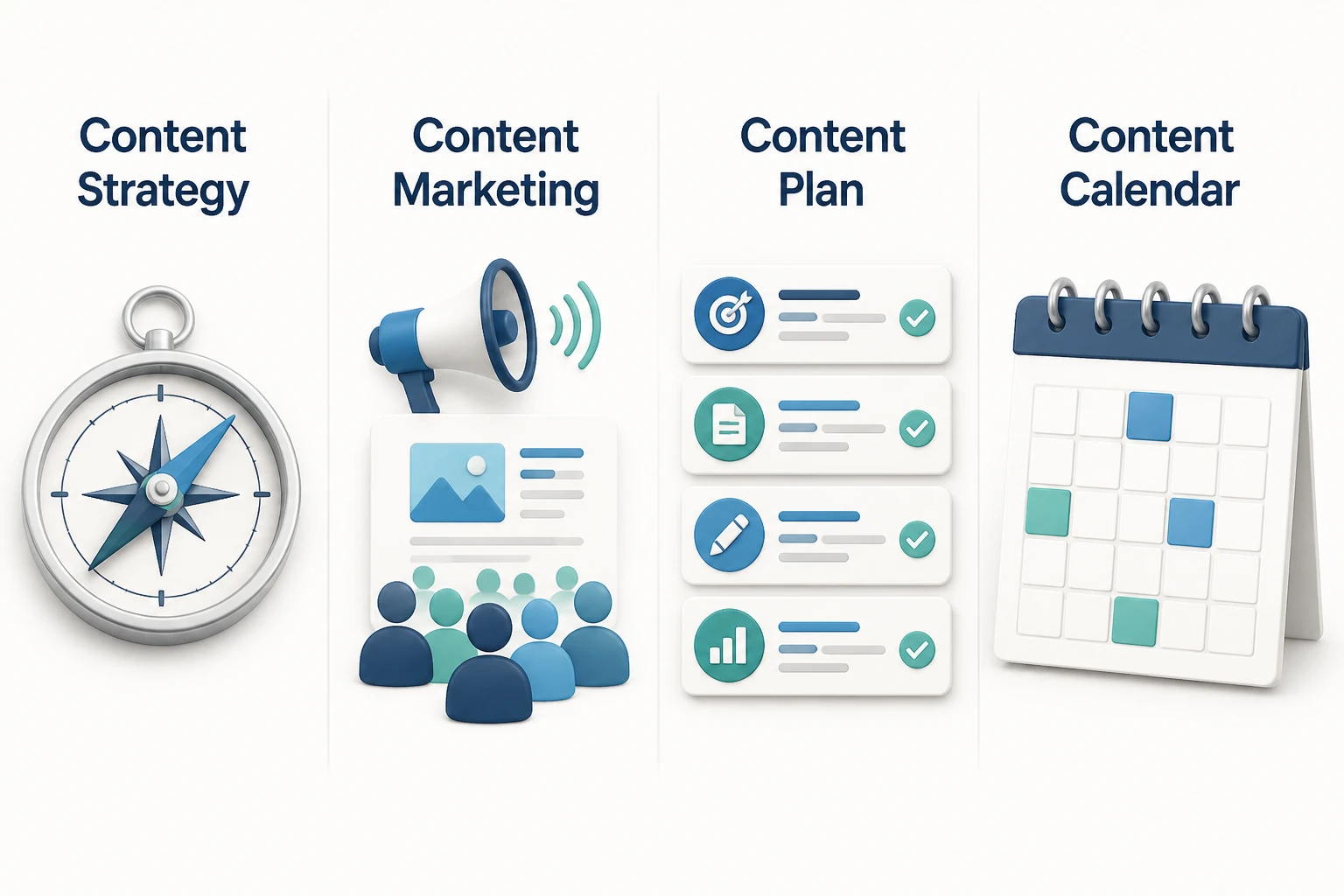
These terms overlap, but treating them as the same thing creates a common problem. A team can publish on time every week without knowing whether its content helps the right audience.
| Term | Main Job | Example |
|---|---|---|
| Content strategy | Decide who to help, why, and how | Help small retailers understand stock control so suitable buyers request a demo |
| Content marketing | Build interest and trust through useful content | Publish stock control guides, send helpful emails, and share customer education |
| Content plan | Set out the work needed | Assign a stock counting guide, a comparison page, and an email series |
| Content calendar | Schedule production and release | Set draft, review, and publishing dates |
| SEO content strategy | Help relevant audiences find content through search | Match pages to search needs and connect related pages with useful links |
Content strategy is broader than marketing because it also covers information people need after they buy. Setup guides, support pages, and account emails may not attract new customers, but they can help existing customers use a product well.
SEO is one way people find content, not the whole strategy. A page can rank well and still fail if it answers the wrong question, attracts the wrong audience, or leaves readers unsure what to do next.
How to Create a Content Strategy
To create a content strategy, start with a business problem and a real audience need, then choose the content and channels that connect them. Set limits based on your team's time and skills before you commit to a publishing schedule.
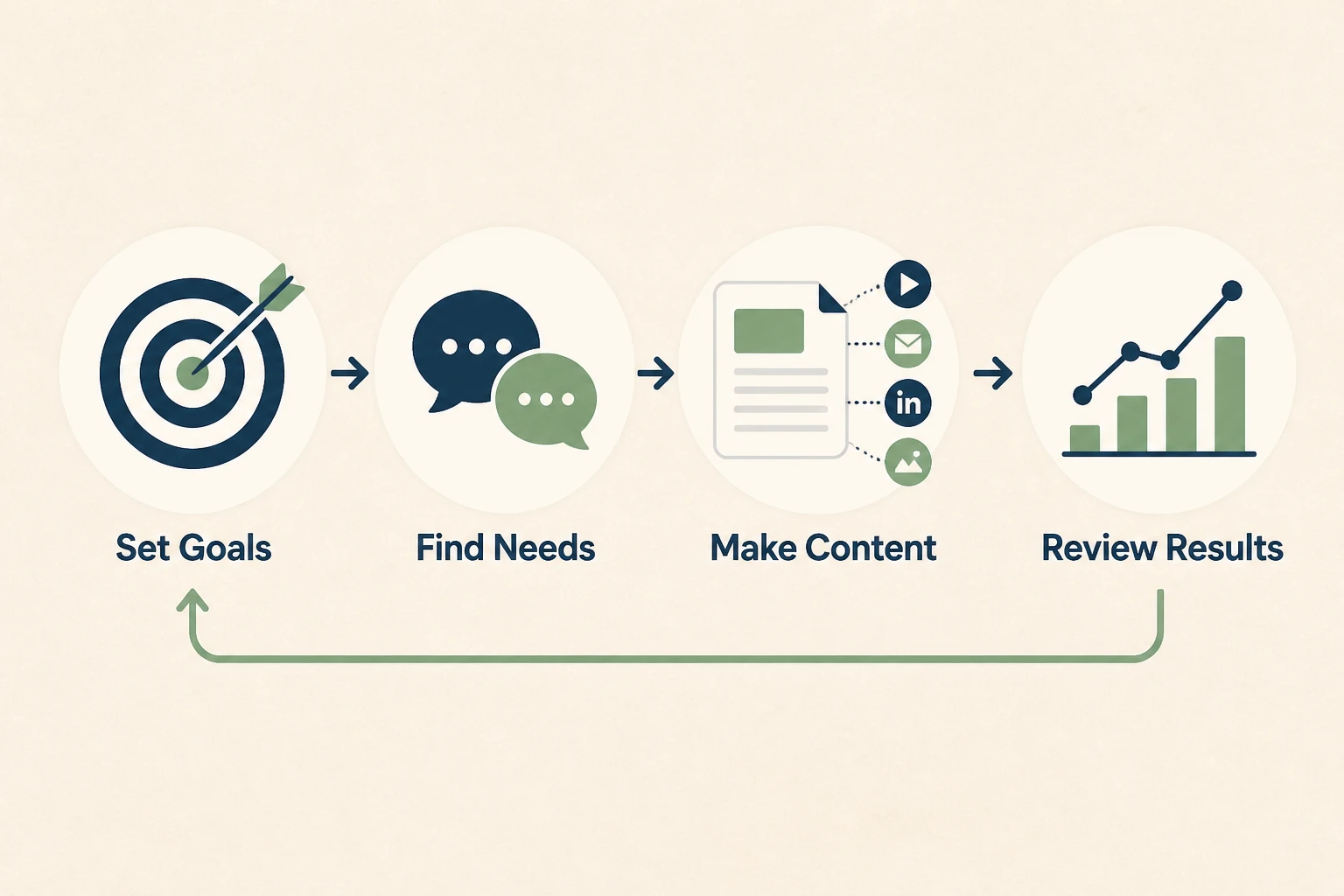
The following steps turn a broad aim into decisions your team can use.
Choose one main goal. Start with the business problem, such as too few suitable inquiries, slow product setup, or repeated support questions. “Publish more content” is an activity, not a goal. For a sales goal, agree on what makes an inquiry suitable before measuring success.
Define the audience by its task. “Small business owners” is often too broad to guide a writer. “First-time shop owners choosing a stock control system” gives the team a clearer problem to solve. Use sales questions, support requests, customer interviews, and search data to check that the need is real.
Review the content you already have. A content audit is a review of existing pages and other content. Record each item's purpose, audience, accuracy, results, and owner, then decide whether to keep, update, combine, or remove it. Do not delete a low-traffic page just because it has few visits. A support guide may serve a small but important group.
Map questions to the next decision. List what people need to understand before, during, and after choosing a solution. Search intent means the task behind a search, such as learning a process, comparing options, or finding a service. Read the current search results to understand that task, but do not copy their structure without checking what your audience needs.
Choose a focused set of topics and formats. Group related questions into a few topic areas, often called content pillars. Choose a format based on the task rather than habit. A comparison may need a table, a hands-on process may need a video, and a repeatable task may need a checklist.
Plan distribution and the next step. Decide how each piece will reach its audience through search, email, social media, sales conversations, or support. Give readers a useful next action that fits how ready they are to act. Someone learning a basic term may need another guide, while someone comparing providers may need a service page.
Assign owners and review rules. Name who drafts, checks facts, approves, publishes, and maintains each type of content. Set a review date based on how quickly the subject changes, and define which results will prompt an update. Plan only as much work as the team can handle so reviews and upkeep do not get dropped when deadlines get tight.
Prioritize the Problem, Not Just the Keyword
Choose content by weighing audience need, business relevance, gaps in your current content, and the effort needed to produce a reliable answer. Search volume can help estimate demand, but it does not show how close a reader is to taking a useful action.
For example, a detailed service comparison may have less search demand than a broad definition, yet be more useful to people who are ready to buy. If a sales team keeps answering the same buying question, that is a strong reason to consider a page even when keyword tools show limited data.
Before creating a new page, check whether an existing page already serves the same purpose. Two pages answering the same question can spread useful information across the site and leave readers unsure which one to trust. Update or combine them when one strong page would do the job better.
Match the Work to the Team
Choose fewer formats when time or specialist knowledge is limited. One well-researched guide that supports an email and a sales conversation may be more useful than several rushed pieces made for separate channels.
A clear brief makes outside help easier to manage. Before hiring SEO content and copywriting services, record the audience, search need, main message, evidence required, and desired next step. The writer can then solve a defined problem instead of guessing what the business wants.
A Content Strategy Example for a Small Business
A small business content strategy should connect a specific customer problem to useful content and a business result you can measure. The example below shows that connection for an imagined accounting firm, not a reported client project.
Suppose the firm wants more inquiries from sole traders who are unsure about their bookkeeping. Its strategy should help those readers understand their duties and decide when paid help makes sense, rather than chase every finance topic with a large audience.
| Strategy Choice | Illustrative Decision |
|---|---|
| Business goal | Increase suitable bookkeeping consultation requests |
| Audience | New sole traders who manage their own records but need guidance |
| Core promise | Explain bookkeeping clearly without making simple tasks seem harder than they are |
| Main topics | Record keeping, expense records, bookkeeping software, and when to hire help |
| Content mix | Practical guides, a checklist, a service comparison, and follow-up emails |
| Distribution | Search for ongoing questions and email for readers who choose to subscribe |
| Next step | Offer a consultation on pages where readers are assessing paid help |
| Main measure | Suitable consultation requests linked to content visits |
| Review needs | Check financial guidance when relevant rules change and use a qualified reviewer |
A reader could start with a guide to keeping business records. That guide could link to a bookkeeping checklist, which then points readers toward a comparison of doing the work themselves and hiring support.
The next step changes with the reader's need. A person learning which records to keep does not need a sales pitch after every paragraph, while someone weighing paid help needs clear service details, costs where available, and a way to ask questions.
Notice what this strategy leaves out. General investing news might attract attention, but it does not directly help the chosen audience solve the bookkeeping problem. Saying no to that topic protects the team's time and keeps the site's focus clear.
How Do You Measure a Content Strategy?
Measure a content strategy by whether it helps the intended audience and supports the chosen business goal. Traffic, rankings, and reactions can explain parts of the result, but none proves business value on its own.
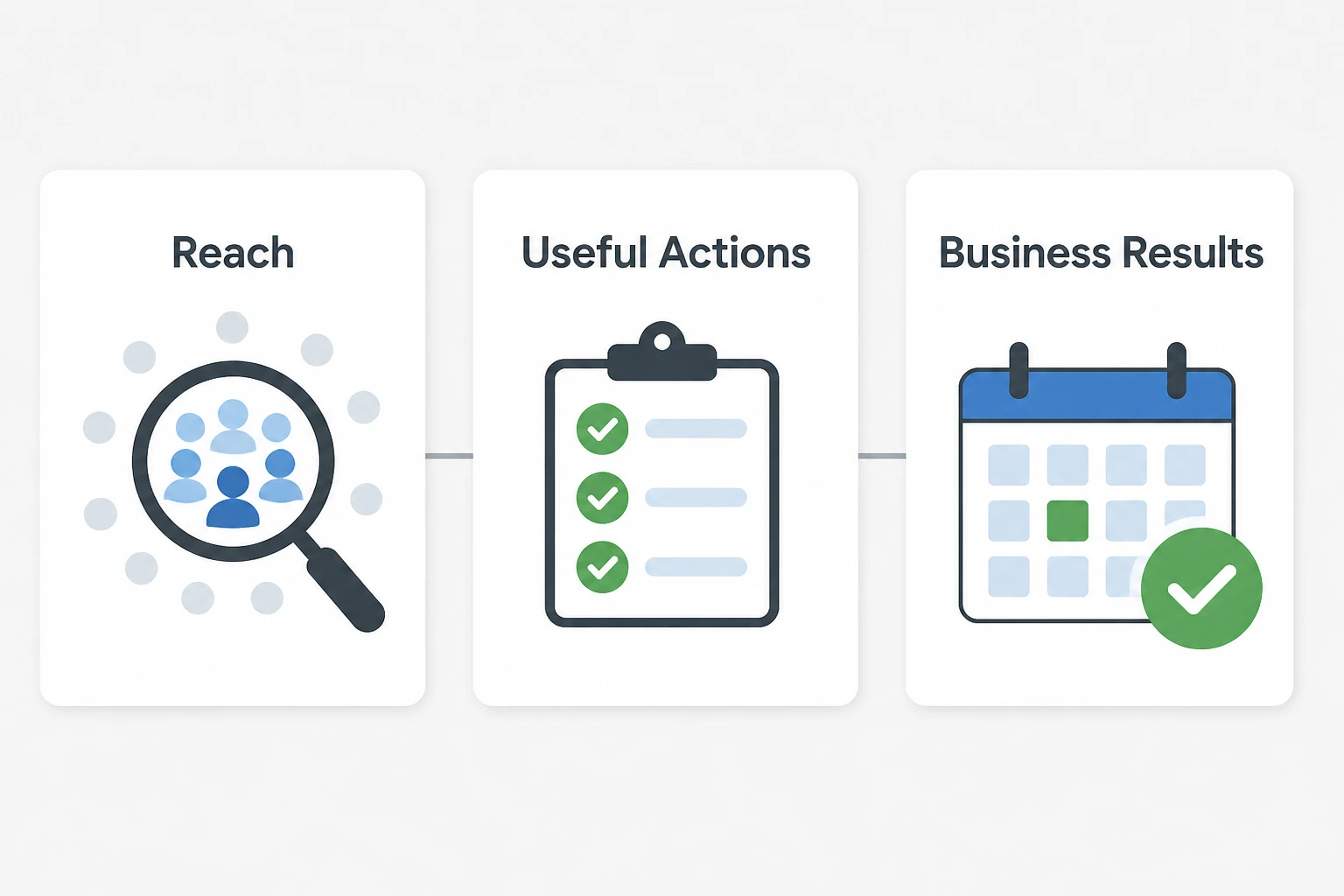
Choose measures that match the content's job. A help article may succeed by helping people complete a task, even if it never brings in a new sales lead.
| Goal | Main Measure | Supporting Checks | What Can Mislead You |
|---|---|---|---|
| Reach relevant readers | Visits from the intended audience | Relevant search queries and visits to related pages | Broad traffic with little connection to the business |
| Generate inquiries | Suitable inquiries or booked calls | Form completion and visits to service pages | Counting spam or poor-fit leads as success |
| Support sales | Content use in real sales conversations | Buyer questions and feedback from sales staff | Giving one page full credit for a complex sale |
| Help customers | Successful task completion or helpfulness feedback | Repeat questions and support contact patterns | Assuming fewer support tickets always means better help |
| Build an email audience | Relevant subscribers who stay engaged | Replies, useful link clicks, and unsubscribes | Counting list growth without checking audience fit |
Google Search Console shows how pages appear in Google Search, including queries, impressions, and clicks. Website analytics tools can show visits and tracked actions, while a customer relationship management system, or CRM, can help connect inquiries to later sales results.
No tool shows the whole path. People may read on one device, return on another, decline tracking, or speak to sales without filling in a form. Use tracking alongside customer feedback and sales notes rather than treating one report as a complete record.
Use Results to Choose the Next Change
Look for the weak point before changing the whole strategy. Different patterns call for different actions.
- If the right people visit but rarely take the next step, check the offer, page clarity, and next-step link before chasing more traffic.
- If many visitors arrive with unrelated needs, review the topic and search intent rather than adding more sales prompts.
- If an accurate, useful page gets little attention, check whether people can find it through search, internal links, email, or other planned channels.
- If readers keep asking a question the page claims to answer, review the explanation rather than assuming they did not read it.
Compare content with its own past results and with pages that serve a similar purpose. A buying guide and a basic definition should not have the same sales target because their readers are at different points in the decision.
What Should Your First Content Strategy Look Like?
Your first content strategy can be a short working document rather than a large presentation. It needs enough detail to guide choices, assign work, and judge results without becoming hard to maintain.
Start with a small scope that your team can support. If nobody has time to check technical claims or update old pages, a larger calendar will increase the backlog rather than solve the problem.
| Field | What to Write |
|---|---|
| Goal | The business problem the content should help solve |
| Audience | The people you want to help and the task they face |
| Evidence | Customer questions, sales notes, support requests, or search findings |
| Main message | What readers should understand after using the content |
| Topic focus | The small set of subjects you can cover with useful depth |
| Formats and channels | What you will create and how people will find it |
| Next step | The useful action readers can take when ready |
| Ownership | Who creates, checks, publishes, and updates the work |
| Measurement | The main result and supporting checks |
| Review trigger | A date, rule change, product change, or result that prompts a review |
As an example of a first-month plan, use the opening week to review customer questions and existing pages. In the next week, choose the main goal, audience, and most pressing gap, then prepare a brief and assign a reviewer. Use the remaining time to publish or improve the chosen content, share it through the planned channels, and check that tracking works.
That month is a setup example, not a promise that content will produce sales within that period. Gaining search visibility and making buying decisions take varying amounts of time, so agree on review points without treating them as deadlines for guaranteed results.
The simplest test is whether the strategy helps you make a choice. If you cannot use it to reject an off-topic idea, explain a page's purpose, or name the person responsible for its upkeep, it needs clearer decisions rather than more pages.
Frequently Asked Questions
How Often Should You Review a Content Strategy?
Review a content strategy whenever audience needs, business goals, products, or results change enough to affect your choices. A regular check can help, but fast-changing topics also need reviews triggered by events such as a rule change or product release. Do not wait for a planned review date to correct content that has become wrong.
Can a Small Business Have a Content Strategy Without a Blog?
A small business can have a content strategy without publishing a blog. Service pages, product guides, emails, videos, and support documents can meet audience needs when they have clear roles. Choose a blog only when articles are a useful way to answer real questions and the business has the time to maintain them.
Who Should Own a Content Strategy?
One person should own the content strategy, with input from the teams that understand customers and the subject. In a small business, that may be the owner or marketing lead; in a larger company, it may be a content strategist. Subject experts should still check specialist claims, even when another person manages the work.
Can AI Help You Create a Content Strategy?
AI can help organize research, group questions, and draft working documents, but it should not replace customer evidence or human judgment. Check its suggestions against real audience needs, business goals, and reliable sources. Avoid sharing private customer data in unapproved tools, and have a responsible person review facts and priorities before acting.
Do You Need Paid Tools to Build a Content Strategy?
You do not need paid tools to build a useful content strategy. A spreadsheet, customer questions, website data, and free tools such as Google Search Console can support an initial plan. Paid tools become worth considering when they solve a clear problem, such as reviewing a large site or managing work across several teams.
Want us to look at your situation?
Share your website and goals. We will reply with honest, specific suggestions.